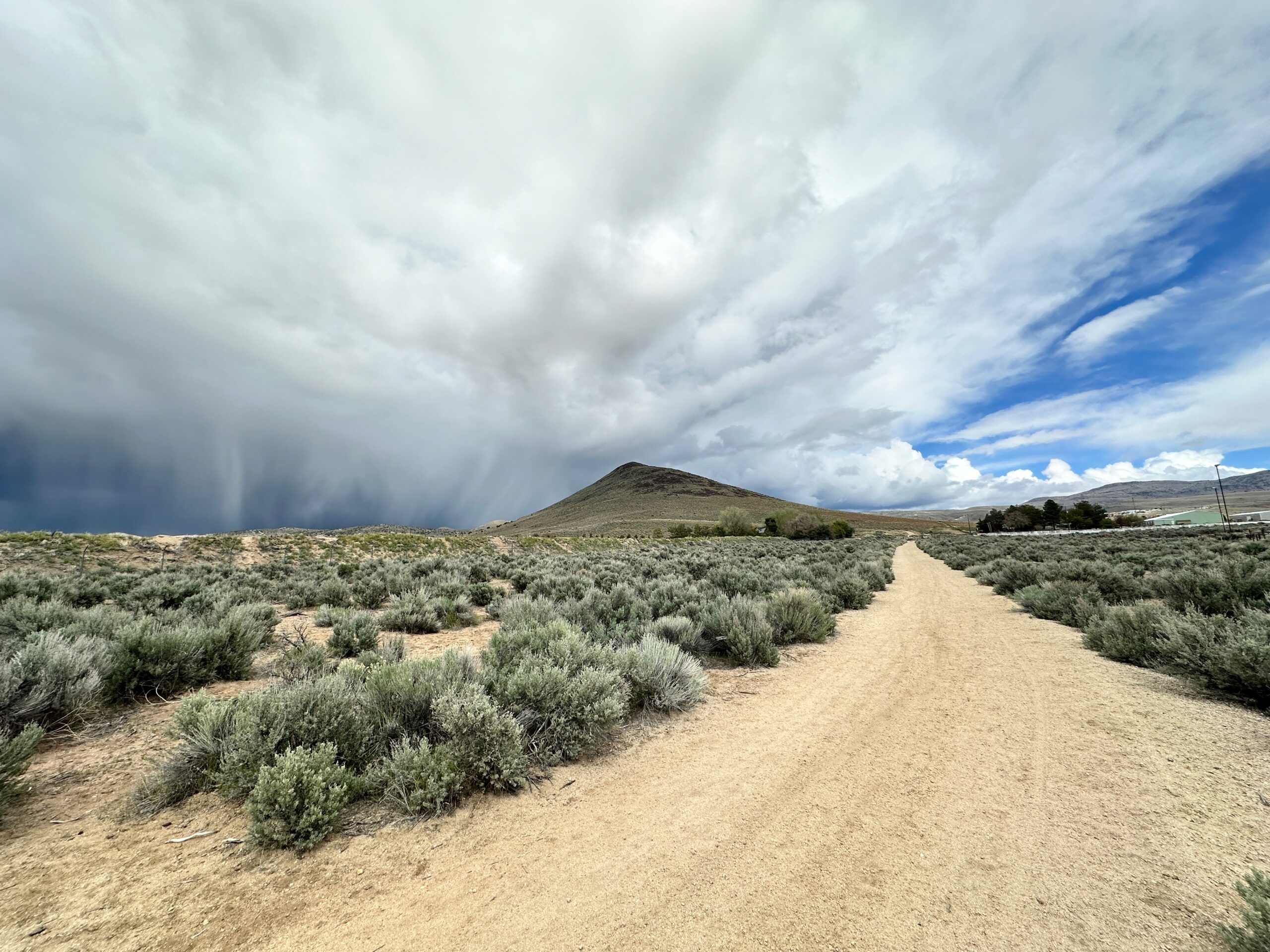
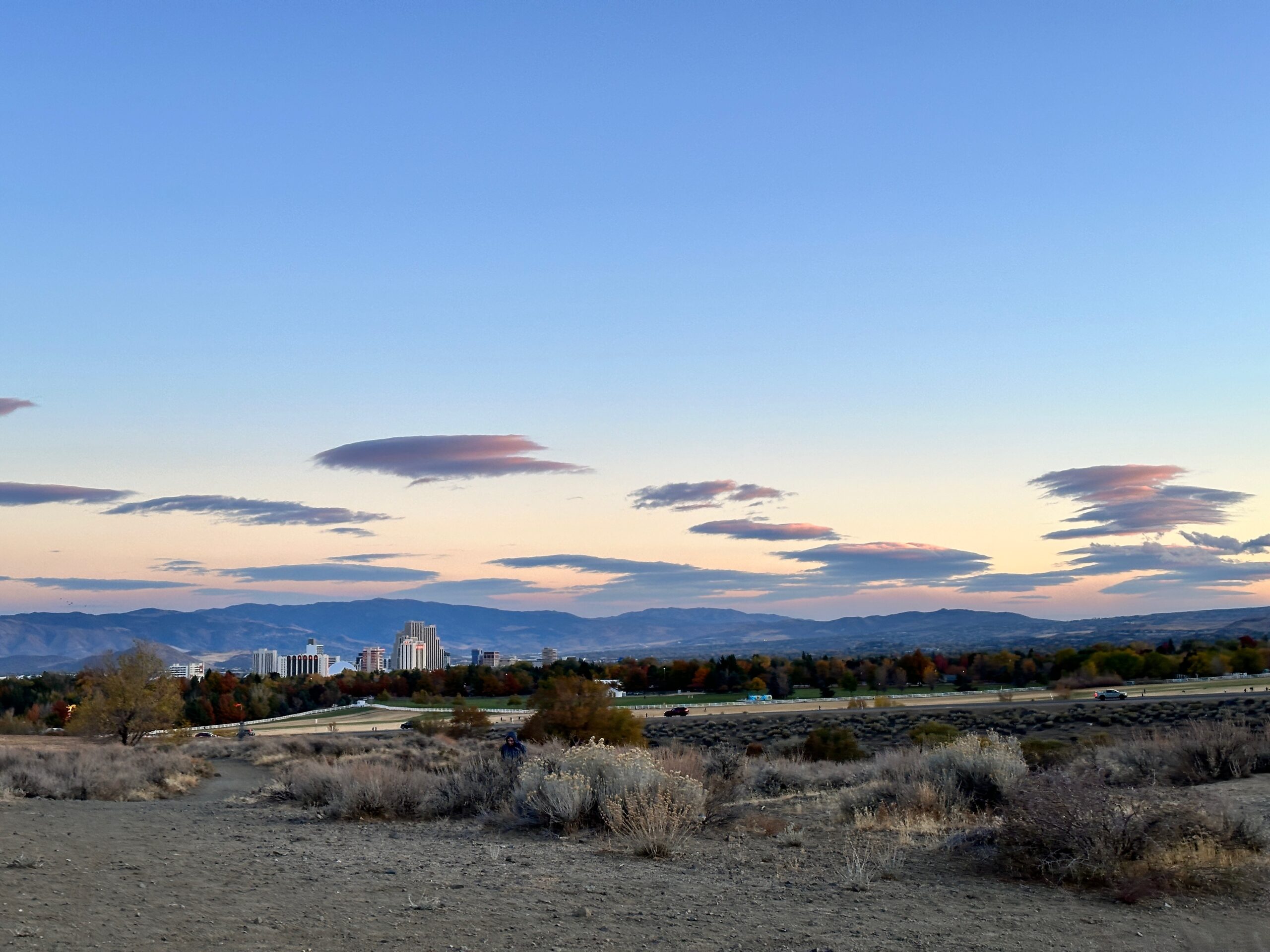
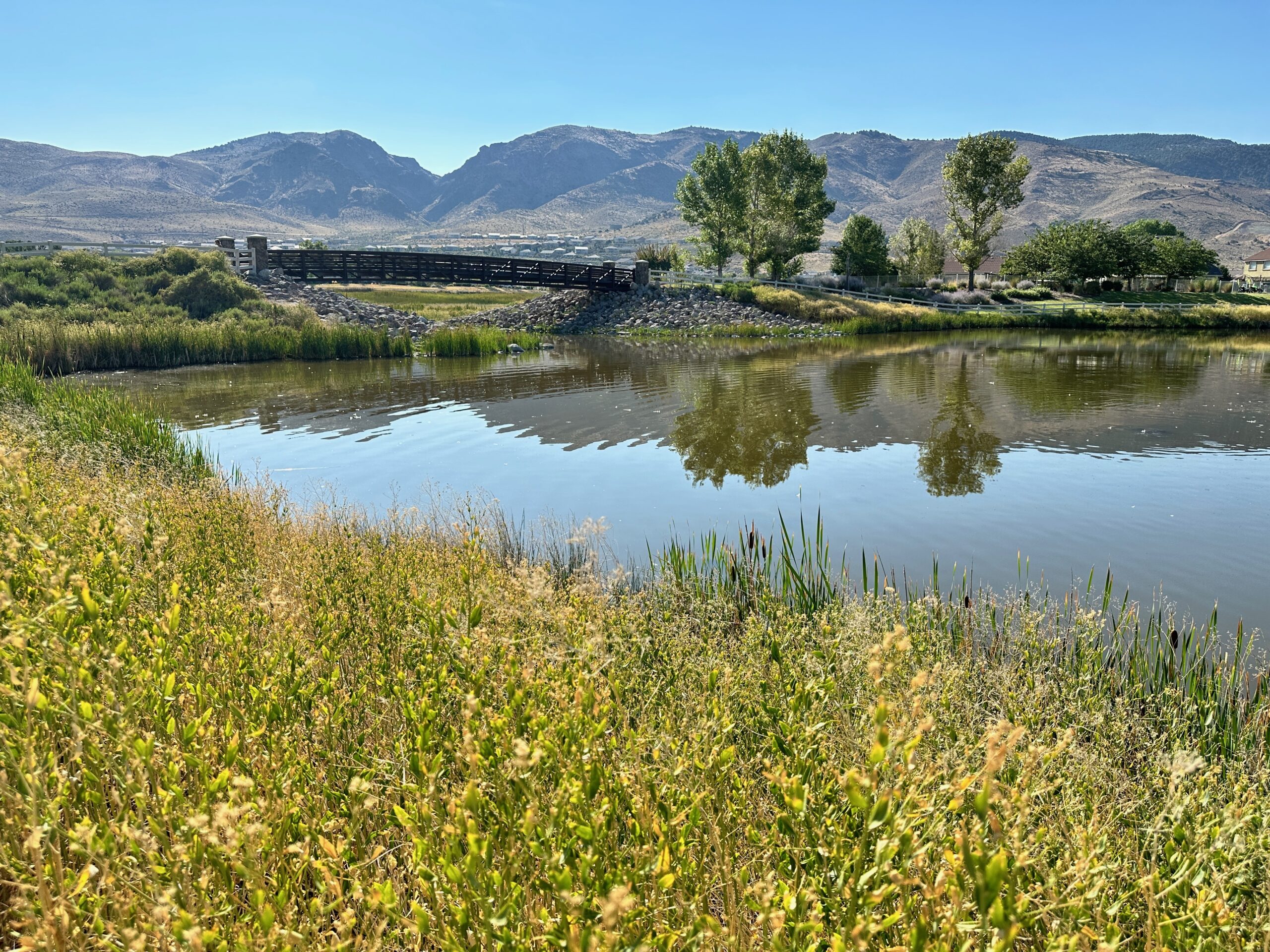
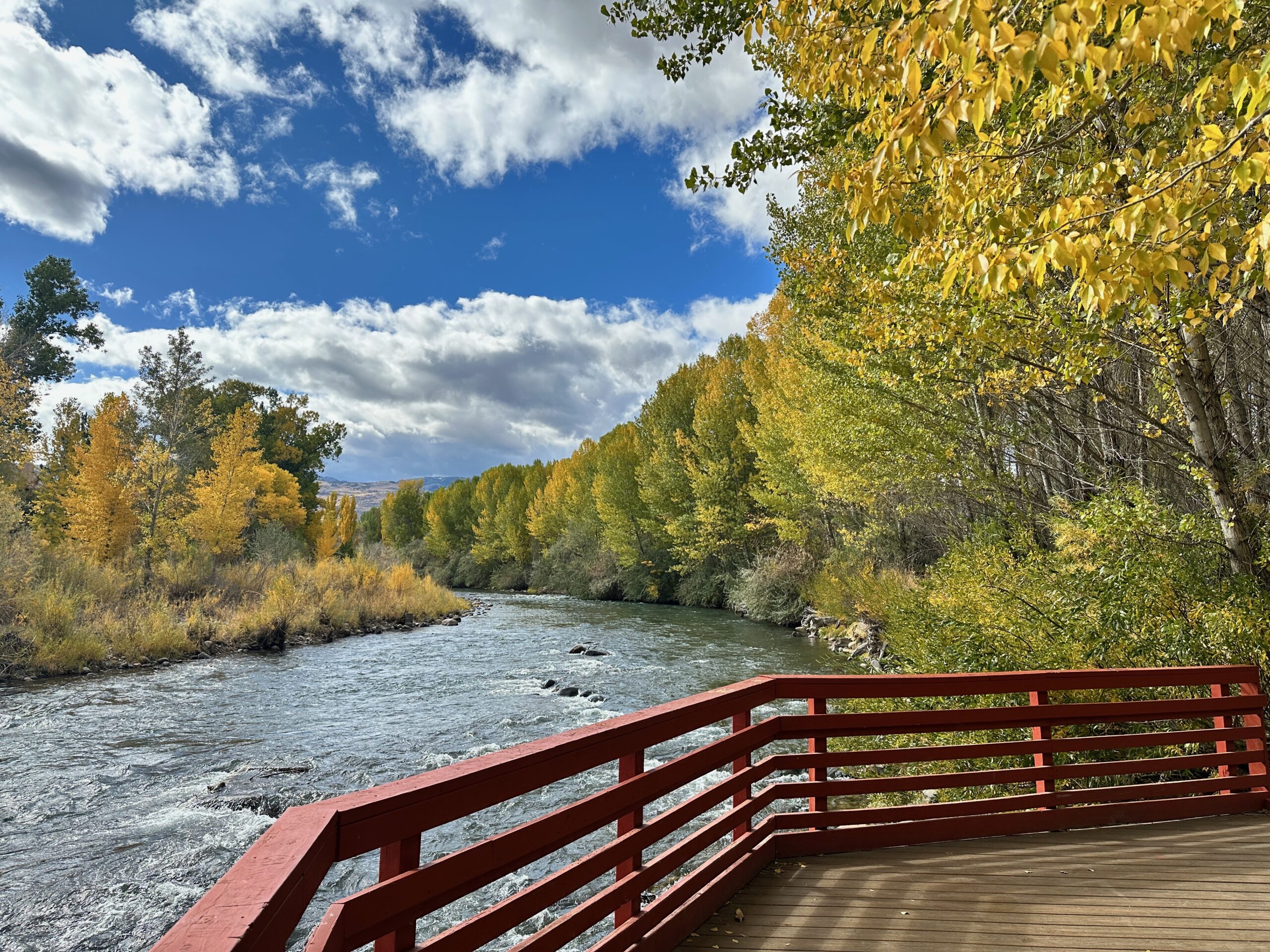
In an interview with Michael Branch, a local writer and self-described ecocritic, he endearingly described Northern Nevada to me as an alien place that “just looks like it wants to kill you all the time.” This was three years after I moved to Reno…reluctantly. The environment did make me uncomfortable, so open, so dry, so close to explaining the fragility of life. The closest suitable nature, I mistakenly thought, was somewhere in the Lake Tahoe Basin.
With time pressing on each day, trips to Tahoe became less accessible. I needed a natural outlet. One of the first hikes I went on, a journey through the trails on the southeastern flank of Peavine Mountain, my discomfort with the environment followed. I felt feverish in my rush over loose rocks to find some sort of silence, some sort of aloneness. I craved the still calm of nature wrapping its arms around me, but the low brush did little to quell this. I kept climbing higher and higher up the hill, past the landmark “N”, resentment growing with each step. Finally, I came to the top of the mountain and sat, delirious with want and frustration, on an outcrop of pointy red rock. I grumbled toward the wind, as if my anger could stop it from pushing hair into my eyes. I sat here, vowing to move to Oregon, or Montana, or someplace characterized by pine and water.
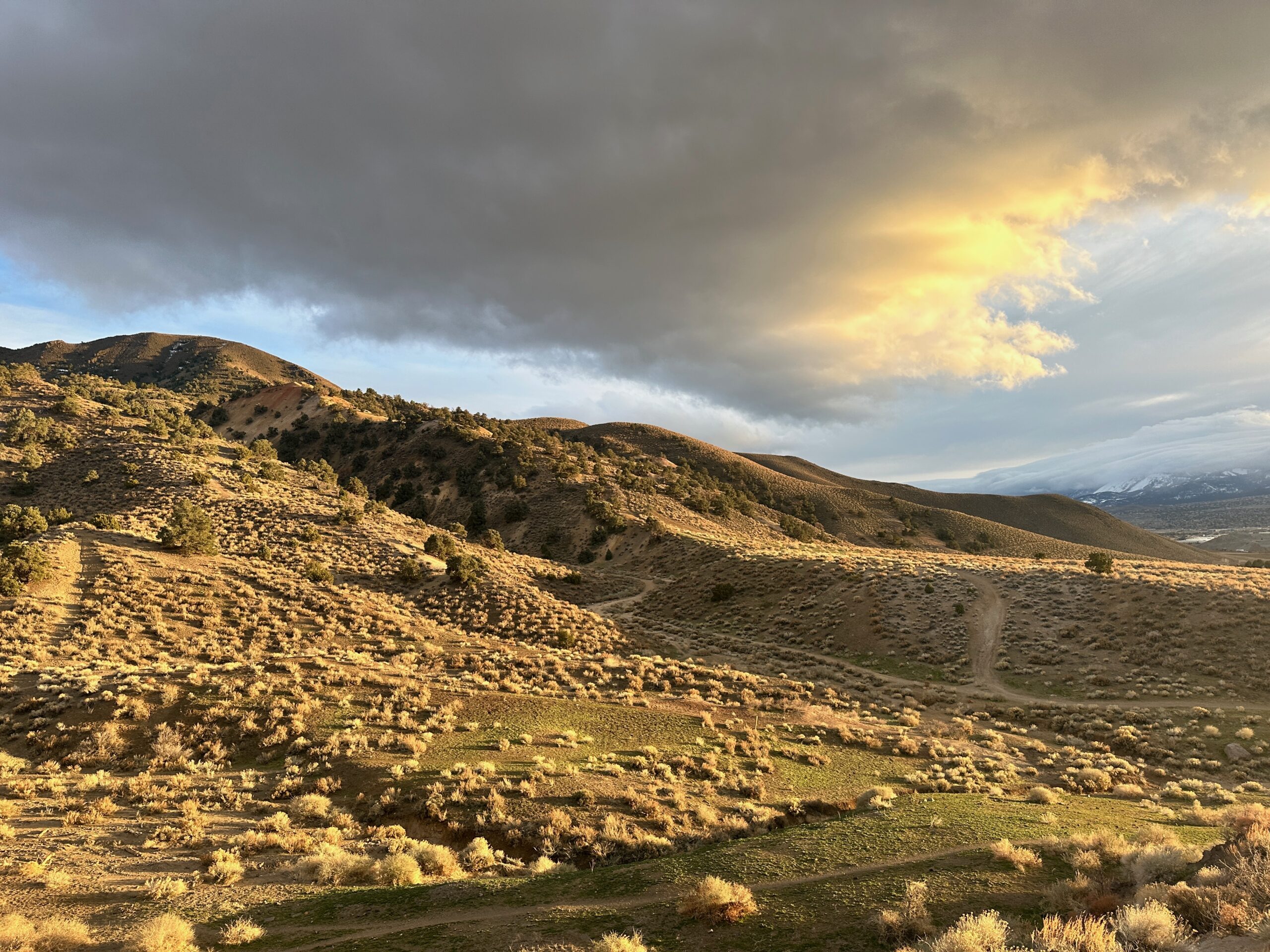
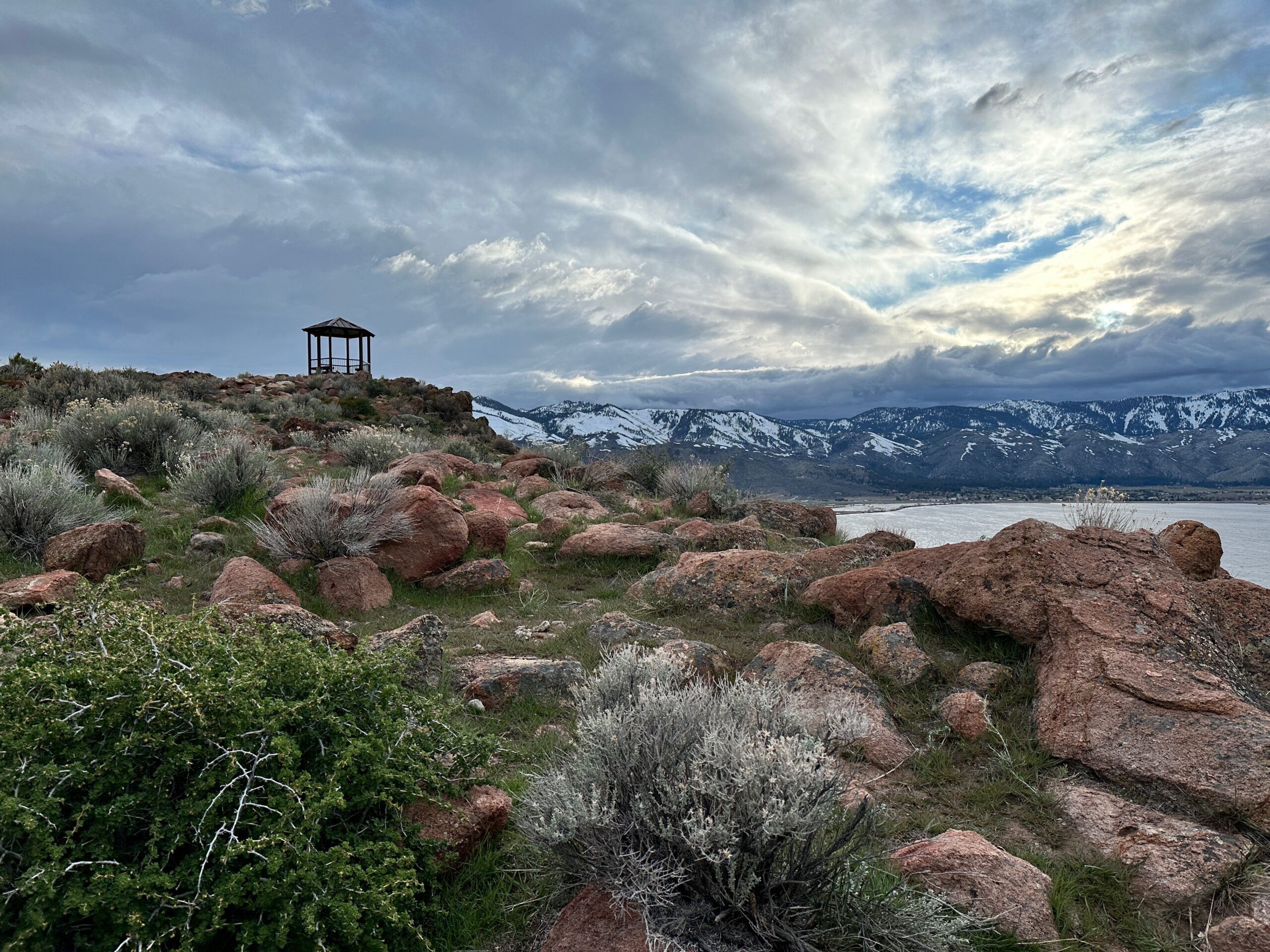
After realizing the futility of reasoning with weather, I looked up to Mount Rose and, across the cup of development, to the Virginia Range. Clouds with seams of golden sunlight cast a glow over the scene. It made me pause, and, after a few deep breaths, I noticed the kaleidoscope of reds, browns, oranges, and pinks of the rock supporting me. The light, dusty sage in the foreground, a contrast playing against the color of the rock. Each element of nature was building upon itself right in front of my eyes.
The wind blew the clouds into a different orientation and the landscape changed again. New canyons within the mountain ranges stood forward, new folds across the hillsides revealed themselves. Like the darting of a common fence lizard, the sight felt impossible to hold onto, impossible to keep. The landscape around me demanded my attention now; the moments spent elsewhere –– looking at my phone, picking up my camera, turning to wrangle my dog –– felt insignificant comparatively.
That moment switched something in me and as I walked back to the trailhead, my neighborhood in sight, I felt incredibly lucky and proud to live in such a place. All these years later, I pity the people that ask with judgment, “You still live in…Reno?”
Branch advocates for this land through his writing, exposing the possibilities that are often overlooked in favor of softer places. “The sheer vastness and starkness of this place attracted me and then worked on me slowly, over time, like wind on a rock, until I had no ambition greater than to make a life in these high, dry wilds,” he wrote in Rants from the Hill. I hope that the book in your hands now provides a similar inspiration to explore the hillsides and peaks that, from a distant first glance, seem monotonous, exposed, and dreary.
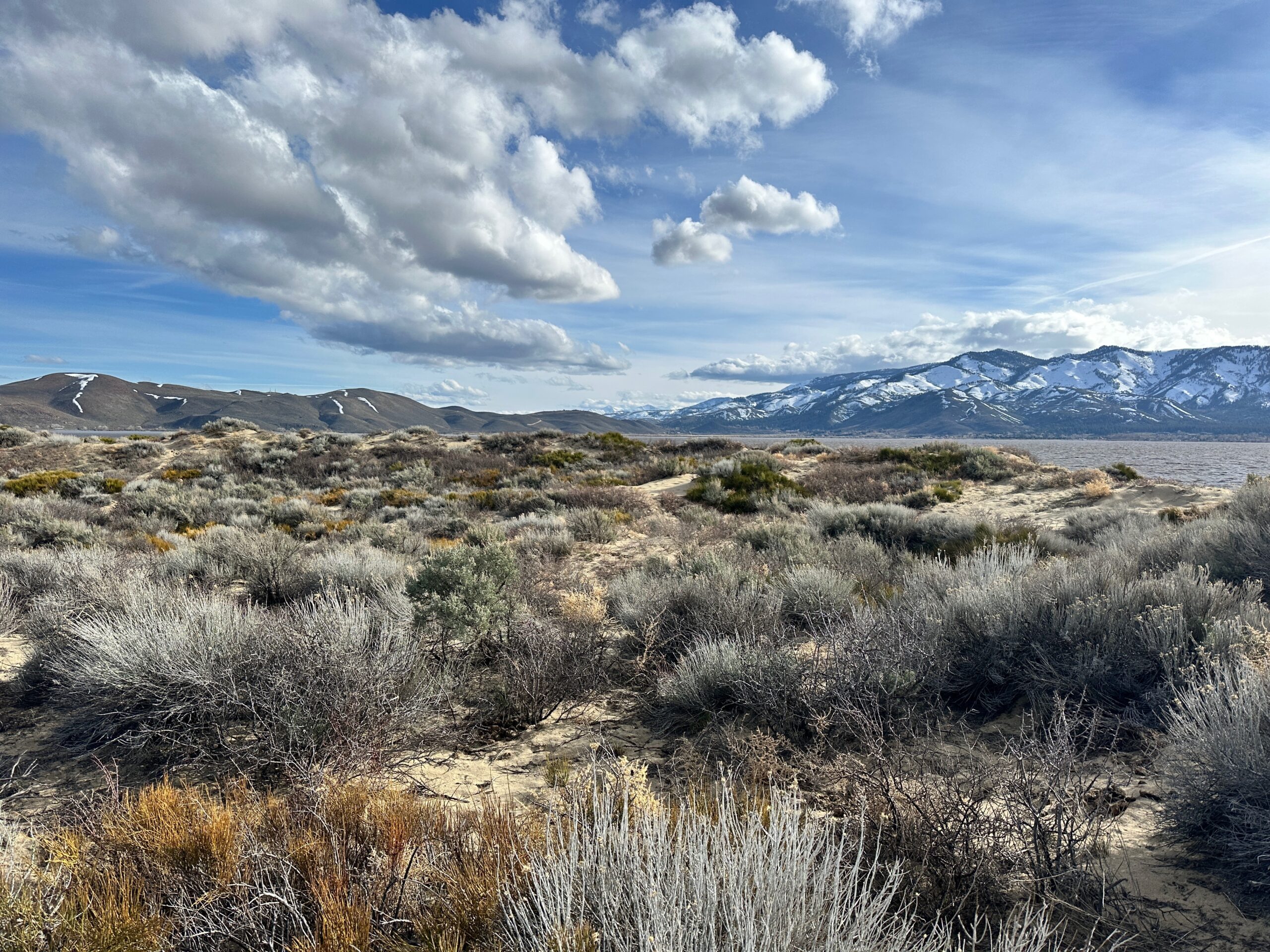
This book details 42 trails, both natural and paved, within neighborhoods and extending into the open space surrounding the urban areas. This book intentionally does not include trails in the Lake Tahoe Basin, showcasing instead the beauty and variety of Northern Nevada’s high desert. If you find a hike along Peavine doesn’t suit you, don’t be discouraged. Try another, try a different time of day or a different time of year. Explore when clouds are cast over the Sierra. Explore in time to the sunset. Slow down and seek native wildflowers or migrating birds. There is not a single trail in this book I wouldn’t happily return to, and many beyond the bounds of these pages to explore.